Signs the membrane has failed
- Grout that stays dark long after a shower.
- Tiles that lift, crack or sound drummy when tapped.
- Bubbling paint or swollen skirting on the other side of the shower wall.
- Stains on the ceiling below an upstairs bathroom.
- A musty smell that cleaning never quite shifts.
- Mould on the outside wall of a cottage below the bathroom window.
On the Coast, older homes often had no proper membrane at all, just a mortar bed and a hob. Where the shower sits on a timber floor, years of slow leaks can quietly rot joists and bearers.
How the job is layered
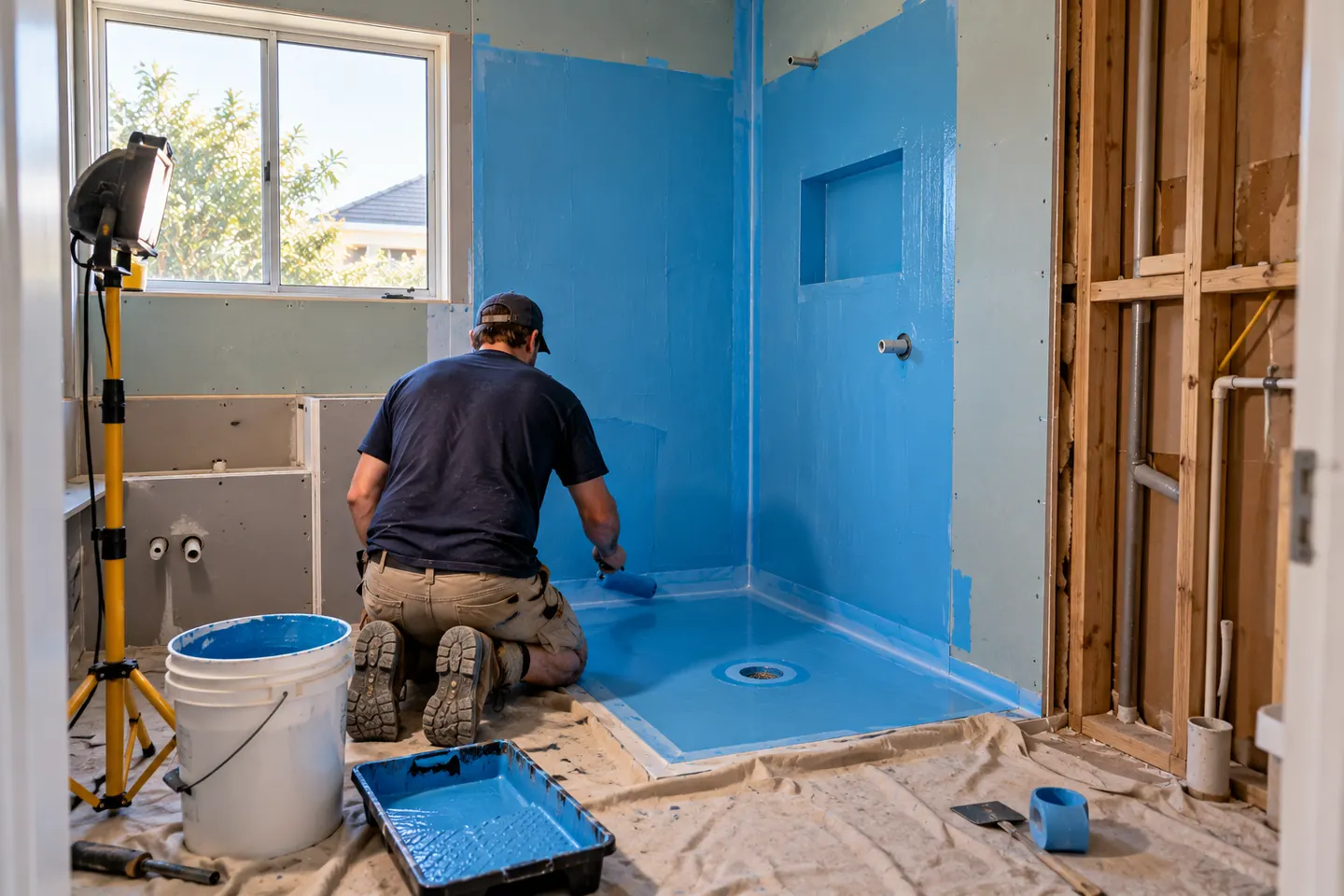
- Substrate prepared — sound, clean, flat, with wet-area sheeting where needed.
- Bond breakers and flashings at wall-floor joints and corners so the membrane can move.
- Puddle flanges at every floor waste.
- Membrane applied in the specified number of coats and thickness.
- Cured for the full manufacturer's time, allowing for humid weather.
- Flood or visual inspection before tiles go on.
- Screed laid with falls to the waste so water never sits.
- Tiles set with the right adhesive, then grouted and sealed.
- Certificate issued.
Tiling choices for a humid climate
| Choice | Why it helps here |
|---|---|
| Larger-format tiles | Fewer grout joints to trap moisture and mould |
| Epoxy or high-performance grout | Less porous, easier to keep clean |
| Slip-resistant floor finish | Safer with wet feet and sandy kids |
| Tiles to ceiling in the shower | No painted plaster in the steam zone |
| Linear drain at the wall | One-direction fall, cleaner look, easier with large tiles |
| Flexible sealant at junctions | Allows movement where walls meet floors |
Getting the falls right
A level shower floor looks great but must still fall to the waste. Too little and water pools; too much and it feels like standing on a slope. Tilers set the screed to the drain before the first tile, and with large tiles the waste position is planned so cuts stay neat.
Part of a renovation, or just the shower
Most of the time waterproofing and tiling happen as part of a full bathroom renovation, ensuite or laundry. If only the shower recess has failed in an otherwise sound room, a shower rebuild can sometimes be priced on its own after an inspection.
Costs
Waterproofing and tiling sit inside the room prices on the cost page, with tile choice being one of the biggest variables.
Call 02 4307 6205 or pop your bathroom details in the form.
Questions people ask before they commit
Aren't tiles already waterproof?
The tiles themselves resist water, but grout and joints are porous. Water gets through them and relies on the membrane underneath to stop it reaching the frame, the floor or the room next door.
How long does a membrane take to cure?
It depends on the product and the conditions, and coastal humidity can slow drying. Most systems need at least a day and often longer between coats and before tiling. Following the manufacturer's cure time is not optional.
Will I get a waterproofing certificate?
Yes. The waterproofing is carried out by a licensed waterproofer and a certificate is provided at completion. Keep it with your house papers — buyers, insurers and strata committees may ask for it.
Can you just regrout a leaking shower?
Regrouting or resealing can buy time if the leak is only at the surface. If the membrane has failed, water keeps getting through and the only lasting fix is to remove the tiles and waterproof again.